Did you know…Harvard College, Massachusetts, was originally called Cambridge?

The college was renamed after John Harvard, who willed his books (about 400 of them) and £779!
Probably best-known for his book on the Revolutions of the Celestial Spheres, Copernicus was a key figure in the Scientific Revolution.

Copernicus’ famous model placed the Sun at the centre of the universe, instead of the Earth. This idea was previously formulated by Aristarchus of Samos, some eighteen centuries earlier.
Made famous by his death, which occurred in Canterbury Cathedral, Becket served as Lord Chancellor to King Henry II.

Becket’s death was an accident, on the King’s part. As good friends sometimes do, Henry and Thomas had several arguments through the years. While it is not known what Henry’s exact words at the time were, he was accompanied by four knights who interpreted his words as a command.

They, according to witnesses, tried to get Becket to accompany them to Winchester to give an account of his actions. When Becket refused, they retrieved their weapons from outside the cathedral, and killed him.
Also called the Dissolution Act, this was passed by the English Long Parliament during the reign of King Charles I. It required Parliament to meet for at least a fifty-day session once every three years, with the intention to prevent the Monarch from ruling without Parliament, which had already happened between 1629 and 1640.
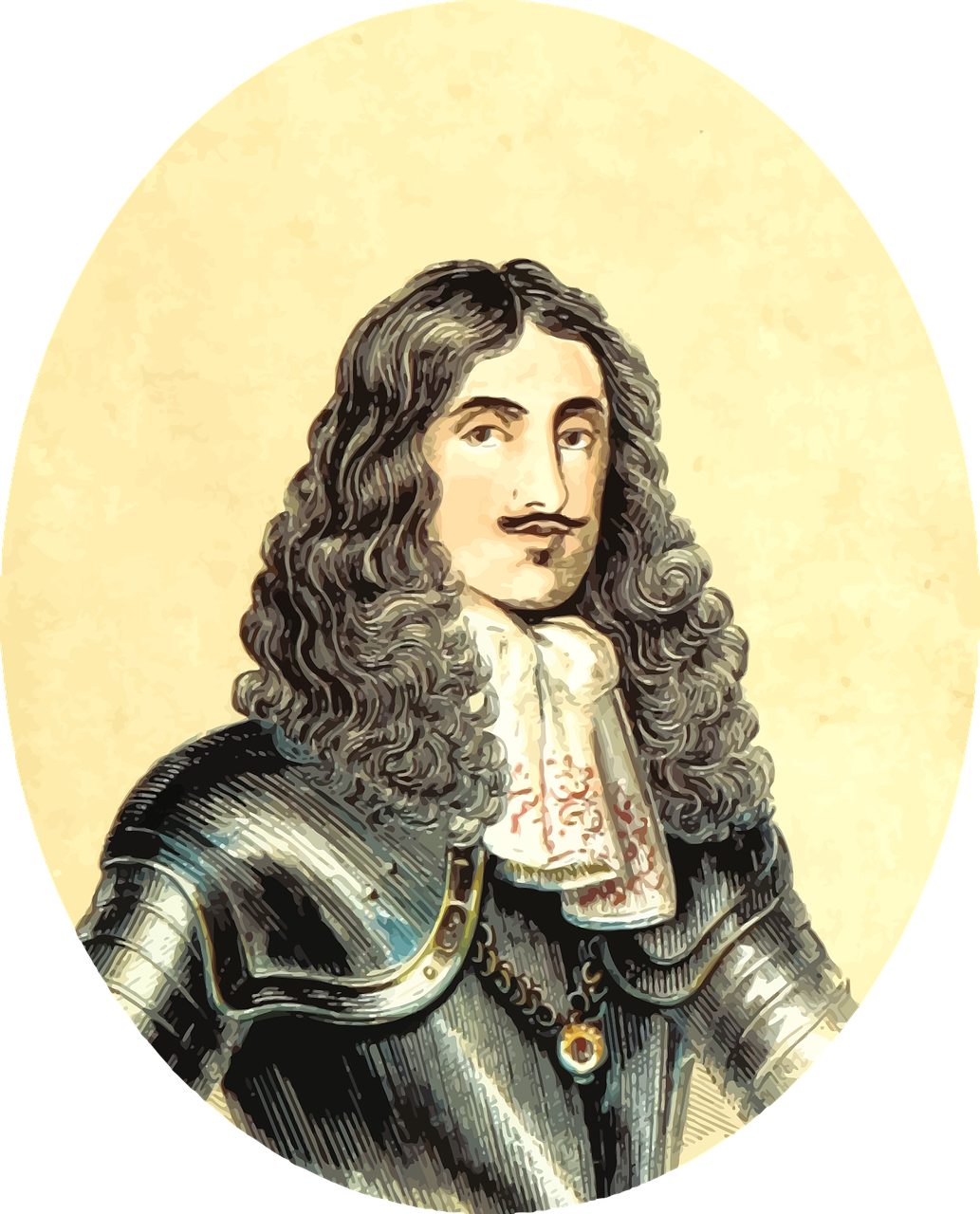
If the King failed to call Parliament, the Act required the Lord Chancellor to issue the writs, and if there was no response, the House of Lords could assemble and issue writs for the election of the House of Commons. What makes the Act unusual, is Clause 11, which stated that the bill would receive the royal assent before the end of the parliamentary session.

Also known as the Battle of Rouvray, this was an attempt by the French and Scots to intercept an English supply convoy during the Hundred Years’ War. The convoy was said to contain around 300 carts and wagons, carrying crossbow shafts, cannons and cannonballs - and also barrels of herring.

The earliest written record of Singapore is thought to be an entry in a Chinese book dating back to the third century. It mentions an island called Pu Luo Chung, which is proposed to be related to the Malay ‘Pulau Ujong’ meaning Island at the End.

By the time of the 14th century, a trading settlement existed on the island. This was started in 1320, when the Mongol Empire sent a trade mission to Long Ya Men (translated roughly to Dragon’s Teeth Gate), believed to be Keppel Harbour near the south of the island. A Chinese traveller - Wang Dayuan - noted that Long Ya Men was two distinct settlements, with Dan Ma Xi as the main settlement, and Ban Zu, which is thought to be present day Fort Canning Hill.

Back in school, it wasn't uncommon to hear the poem chanted in classrooms and round the playground. as with most of these poems and rhym...